
The Bön religion and its history
The Tibetan Bön religion was founded by Tonpa Shenrab Miwo. Its original center was in what is now western Tibet, and in its early phase, it consisted primarily of ritual practices. The specialized priests (Shen and Bön) were particularly responsible for the death rituals of the kings. After Buddhism was brought to Tibet by the Tibetan kings (Dharmarajas), some conflicts arose. At the same time, the Bön religion and Buddhism developed parallel to each other, and it is not clearly proven who borrowed more from the other tradition's ideas.
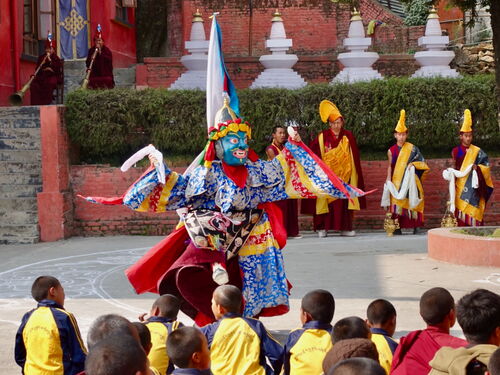
The Bön religion developed side by side with Buddhism, which was establishing itself in the 7th century. Today, the Bön religion forms a structured doctrine. Relations with Buddhism were rather unfriendly in some phases of history. The followers of Bön were persecuted during several periods and often forced to convert to Buddhism. Therefore, many of them migrated to the hinterland of Tibet in the provinces of Amdo and Kham as well as to the border areas in northern Nepal, where they could practice their religion in relative peace. Buddhists and Bönpo live peacefully side by side in these areas. Two Bön monasteries (sMen-ri and gYung-drung-ling) still exist in central Tibet today, but these were and are not surrounded by a large lay community that could support them on a larger scale.
Since the annexation of Tibet by the Chinese in 1950, religious freedom has been very limited. Many Tibetans fled to neighboring countries, where they built new centers, especially in India and Nepal. In this changed situation, a new Tibetan identity developed that relied exclusively on Buddhism and completely excluded the Bön religion. Only with great effort did the Bönpo manage to build their own religious center in Dolanji, in northwestern India (called "New Menri"). Many old original texts from Dolpo were exported and reprinted in India, as many of the texts in Tibet were destroyed, lost, or inaccessible.
In 1978, after visiting the newly built Bön monastery in Dolanji, the Dalai Lama recognized the Bön religion as a school with its own practices and granted Sangye Tenzing (Lungtok Tempa Nyima) in Dolanji the important "throne" title. This title, normally reserved for the highest leaders of Buddhist sects, meant an important step towards the integration of the Bön community into the Tibetan exile community. In the Tibetan parliament in exile today, two representatives of the Bön religion sit alongside two representatives of each of the main Buddhist schools (Nyingma, Kagyu, Sakya, and Gelug).
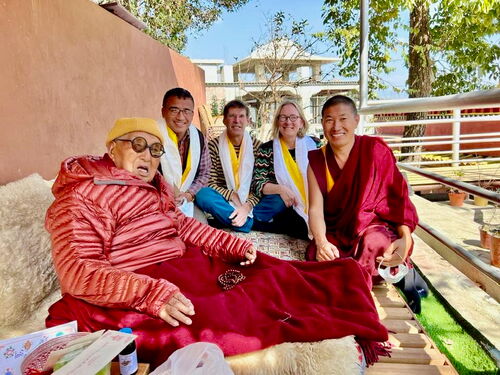
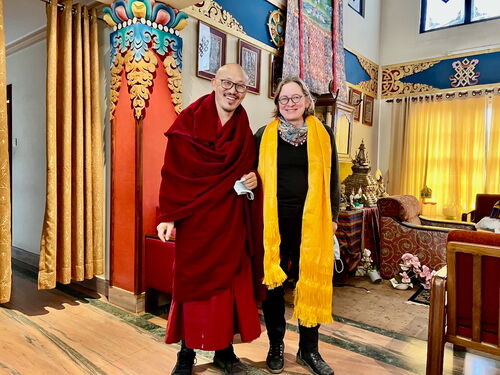
Khenpo Tenpa Yungdrung Rinpoche
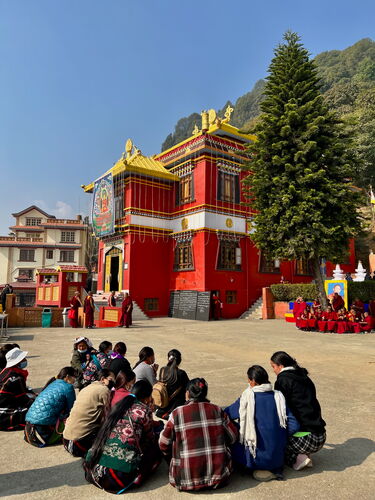
Meanwhile, there is also a large monastery in Kathmandu called Triten Norbutse, which was founded and led by Lopön Tenzin Namdak. The abbot Khenpo Tenpa Yungdrung, who grew up in a refugee camp in Dhorpatan in Nepal, currently heads the monastery. It is located behind the well-known stupa of Swayambhunath at the foot of a hill.