Dolpo - A remote district in Nepal
Dolpo
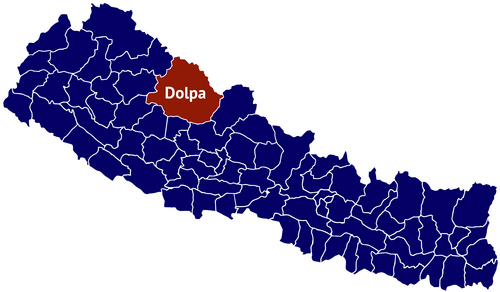
Dolpo (Tibetan) or Dolpa (Nepali) forms one of the northwestern districts of Nepal on the border with Tibet today. Although it is the largest district by area, it is very sparsely populated and has a population of only about 30,000 residents.
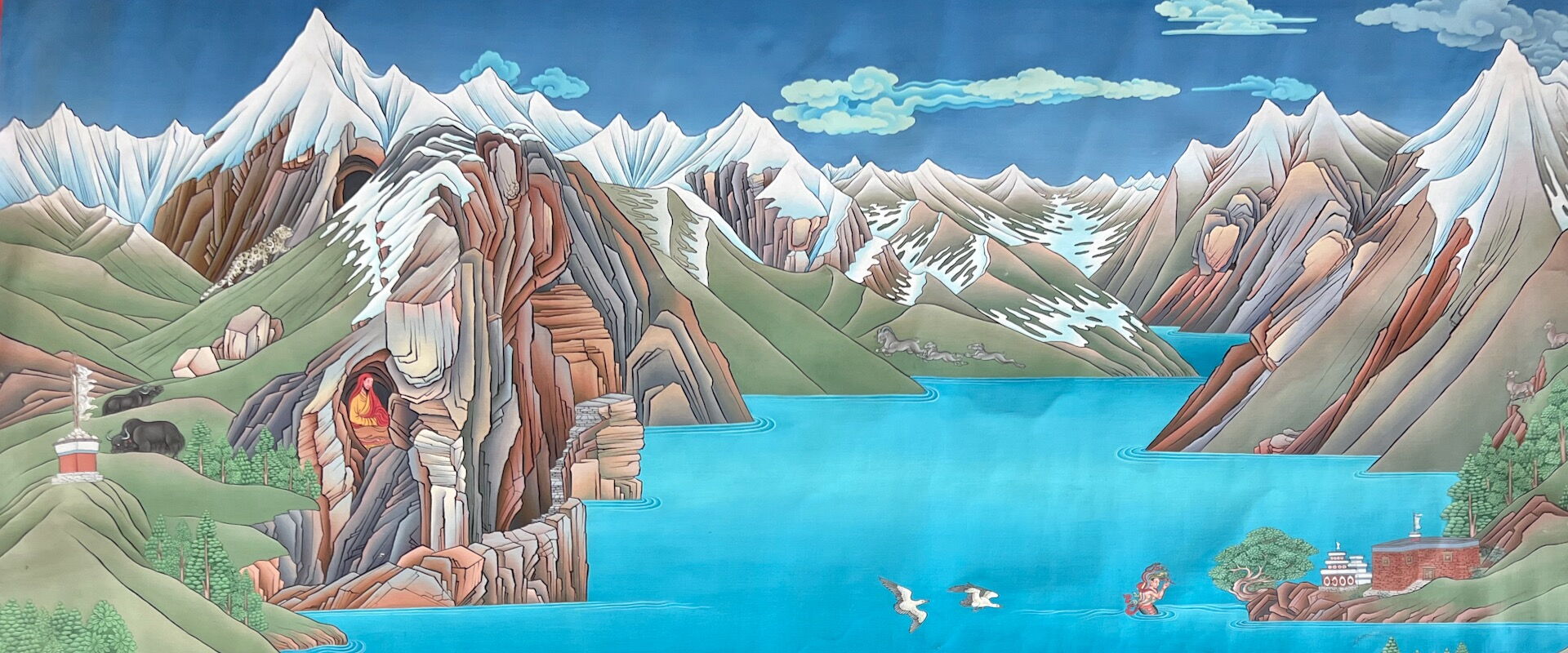
In the northern part of the district, one of the highest settlement areas in the world, largely located above 3000 meters above sea level, lives a Tibetan-speaking population who refer to themselves as Dolpo-pa (someone from Dolpo). Since agriculture and animal husbandry are not sufficient in this barren area, additional goods are obtained through trade. In summer, the men travel to Tibet with their yak caravans, while the women live with the female animals, the dri, in the high pastures and produce butter and cheese there. In Tibet, grain is exchanged for tea, salt, wool, and butter, as well as modern goods. In spring and autumn, the acquired goods are then traded again in southern Dolpo or even Jumla. In winter, people leave their main villages and move to their winter villages or, for those who can afford it, travel to Kathmandu for a pilgrimage. Religiously, the Dolpo-pa belong to the Bön tradition or Buddhism, whereas the southern part of Dolpo is predominantly Hindu or practices shamanism. The Tapriza School is located in the Shey-Phoksundo district, named after the crystal-clear blue lake, the heart of the district, and the Crystal Mountain (Shey).
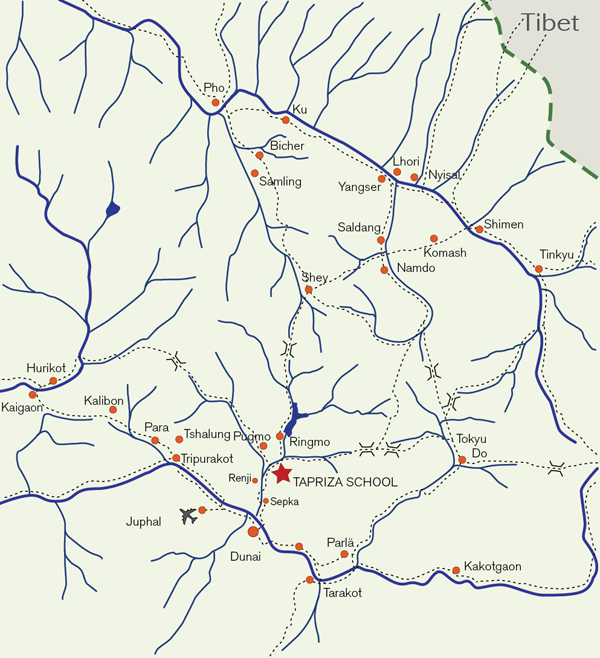
Phoksundo encompasses the villages of Ringmo, Pugmo, Rike, and Renji and forms the main catchment area for the students of the Tapriza School. The school building is centrally located at the intersection of several trade routes and has now become an important meeting place for the village population, especially during school performances and cultural events. To this day, no road leads to the school, and access is only possible on foot from Dunai. There is now sparse solar energy and recently a few telephone antennas, which, however, function unreliably. There is some medical care only in Dunai in the new hospital; otherwise, the local government health posts and the Tibetan medicine post must provide medical care as much as possible. The education rate was extremely low until the start of the Tapriza School and was restricted to primary level (if at all) in most regions. Fortunately, this has improved greatly since the start of the Tapriza School and other schools in other valleys. (written by Marietta Kind)
- Size: 7889 km2 (Largest district in Nepal)
- Elevation: between 1,525-7,625 m above sea level
- Number of districts (VDC = Village Development Committees): 23
- Affiliation: Karnali Province
- District capital is Dunai.
- Population: 42,774 (2021 census), 29,545 (2002 census)
- For a long time, no hospital, only a few health posts
- Since 2024, a new hospital in the district capital of Dunai
- Since 2018, the first connecting road from the south to Dunai, various roads under construction
History of Dolpo
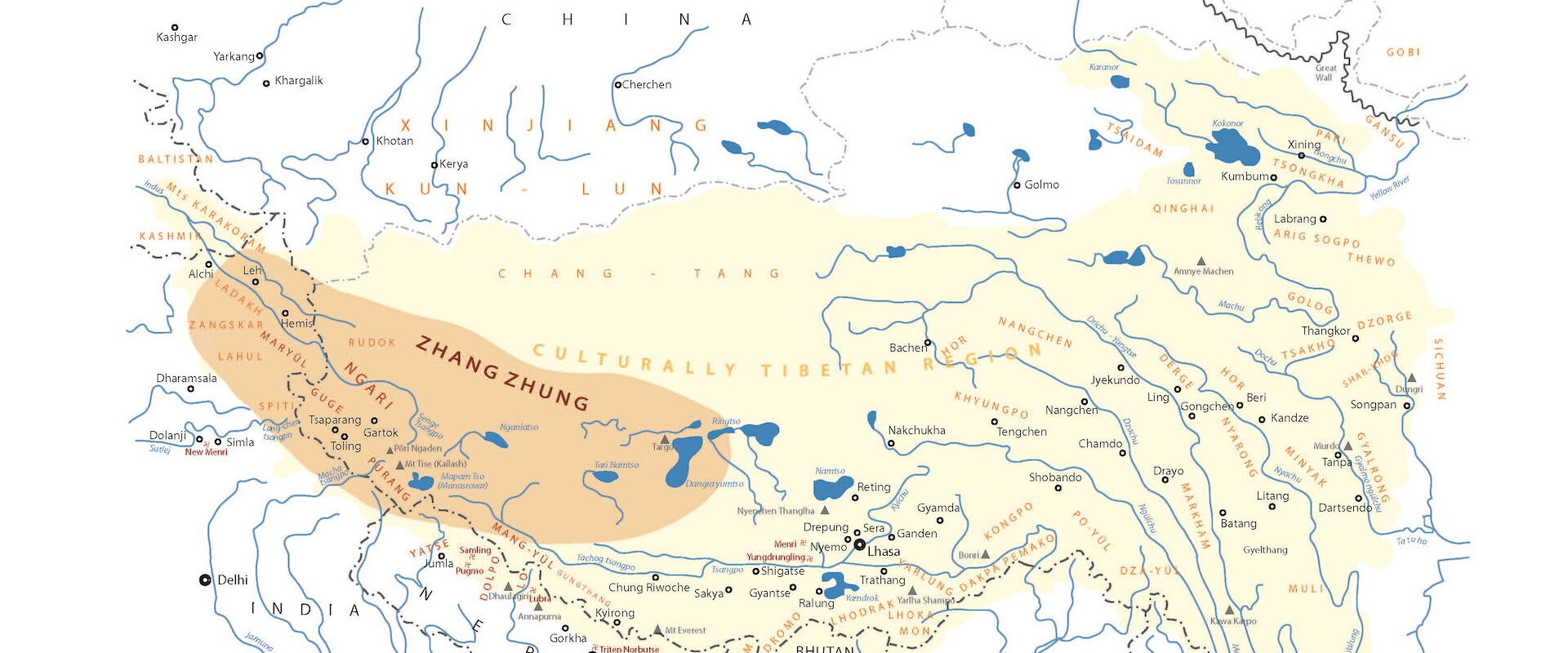
Until the end of the 18th century, Dolpo belonged to Tibet and was under the influence of the neighboring kingdoms and principalities of Lo and Jumla. Later, Dolpo became a protectorate of Lo, today's Mustang district. Following the unification of Nepal at the beginning of the 19th century, the drawing of the border between Nepal and Tibet severed the connection to Lo. Since the introduction of the Nepalese Panchayat system, Dolpo has belonged to Tichurong in the south, where it still pays taxes today. Nepal's opening to tourism in 1951 brought about changes in many regions of Nepal. Dolpo was closed again in 1974, supposedly because Tibetan Khampas (Tibetan fighters aiming for a free Tibet) were hiding in the area, repeatedly causing conflicts with the Nepalese army. On the other hand, there was a risk that China might claim these former Tibetan kingdoms.
In 1989, the southern regions of Phoksundo, Tichurong, and Tarap were reopened for tourism. For a long time, the population of northern Dolpo consisted of Tibetan-speaking inhabitants who had settled during various historical phases. In Nepal, these population groups along the Tibetan border are referred to by the collective term Bhotia (the people from the north). In the northern part of Dolpo, the inhabitants are followers of various Buddhist schools (Nyingma, Kagyu, and Sakya) and the Bön religion, while in the southern part, various mountain cults, forms of shamanism (jhankris and dhami), and meanwhile primarily Hindu belief variants prevail. Following the occupation of Tibet and the uprising in Lhasa in 1959/60, some Tibetans fled through Dolpo or settled there. The inhabitants of Dolpo live mainly in the villages and make their living from agriculture, trade, and animal husbandry.
(written by Marietta Kind)