
Tapriza School
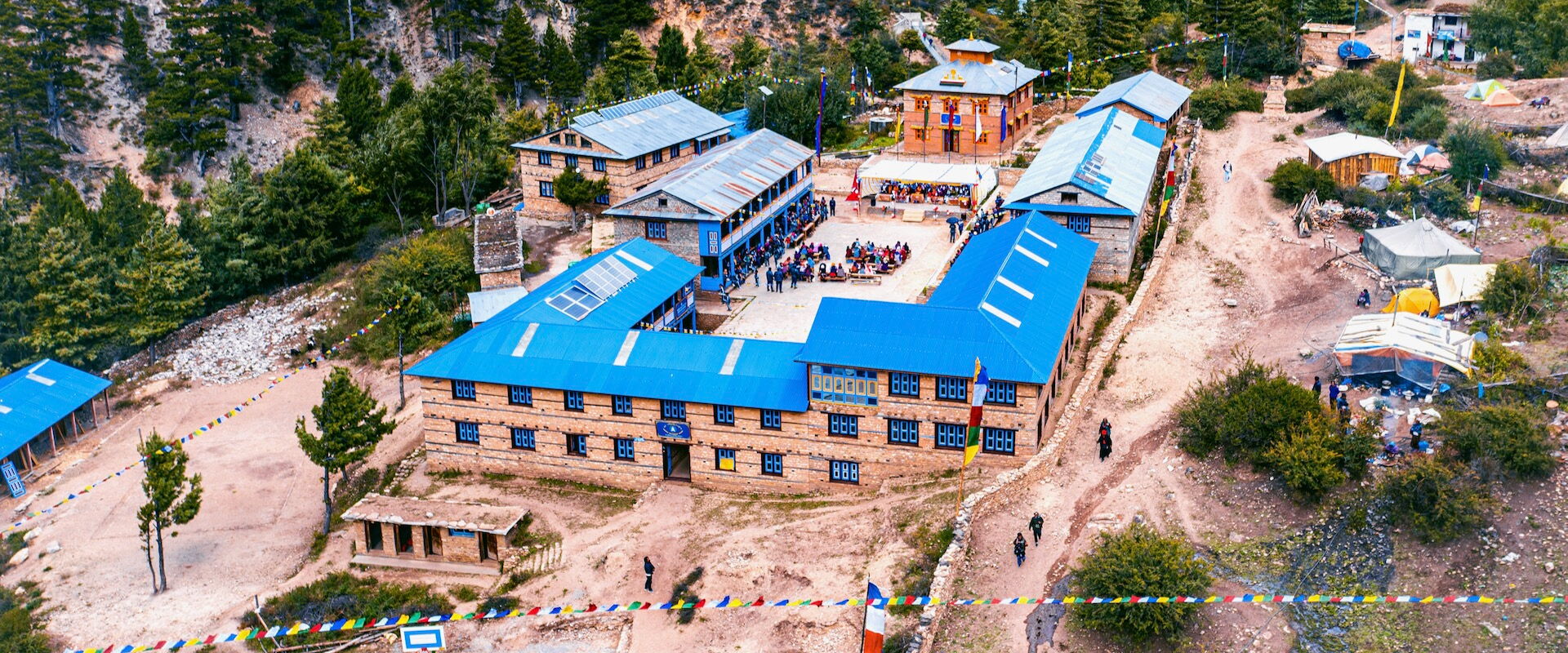
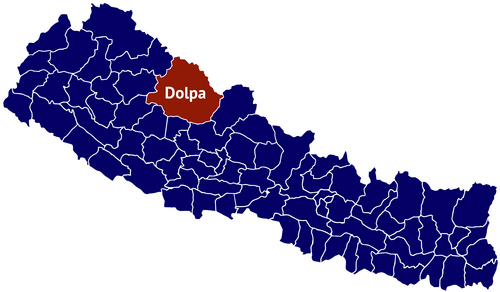
The Tapriza NGO Switzerland has been supporting the operation of a boarding school in the remote Dolpo district in northwestern Nepal since 1998. It enables a Tibetan-speaking minority to attend school and offers the opportunity to learn their own language, history, and culture alongside the national curriculum.
Around 200 children attend classes annually from March to November. The school is closed during the winter because it cannot be heated. Locally, the school is managed by the non-profit organisation TASHI-D (Tapriza Association of Social Help in Dolpo). This association, registered in Nepal, is presided over by Semduk Lama. The board consists of residents and parents from the surrounding villages. An important component of the school is the Bon religion, which is practiced in large parts of Dolpo. Therefore, the school bears the name of the early Bon master Tapriza (Tib. Ta-pi-hri-tsa). However, the school is open to children of all religions.
Location in Dolpo
The school in four numbers
659
Students
since 1997
390
Graduates
since 1997
21
School team
Dolpo and Kathmandu
3072
School altitude
in meters above sea level
A movie about the school
Classes
The students complete a demanding learning program at the Tapriza School. In addition to the national curriculum, there are additional subjects on local traditions as well as two other languages on the schedule. The lessons are also demanding because the material must be internalised in a shorter period of time. This is because classes only take place from March to November, as the school buildings cannot be heated.
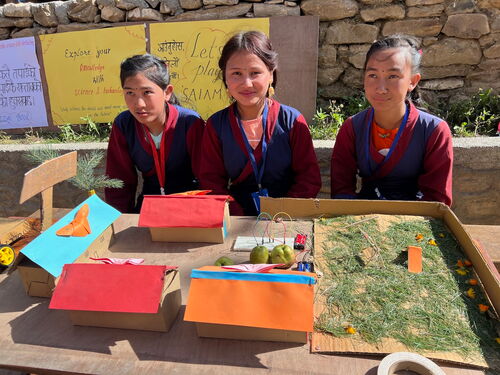
The national curriculum includes Nepali, history, mathematics, and science subjects such as physics and chemistry. In addition to Nepali, the students also learn Tibetan and English. This means the children are learning three languages and their writing systems simultaneously. The children also receive instruction in local culture. This includes Tibetan medicine, dance, singing, the Bon religion, and local history. The lessons in Tibetan medicine are supplemented by excursions in which the children identify and collect plants in nature together with Tibetan doctors. During visits to the villages, the village elders pass on local history, chants, and traditional knowledge in workshops. Furthermore, the school organises a large festive event once a year. This includes dance and theatre performances, a volleyball tournament, and various games and competitions. Here, the children show their families what they have learned.
Quality of the school proven by national examinations
In Nepal, all students in the 8th, 9th, and 10th grades take the same national final exams. This applied to Tapriza students for the first time in 2007. Among the 300 graduates in the Dolpo district, the only three participating Tapriza students passed with flying colors, taking 1st, 2nd, and 4th place – a minor sensation for children whose mother tongue is not Nepali. This result has been repeated practically every year and proves the high quality of education at the Tapriza School – with the effect that school enrollments are now also coming from more distant districts.
School Levels
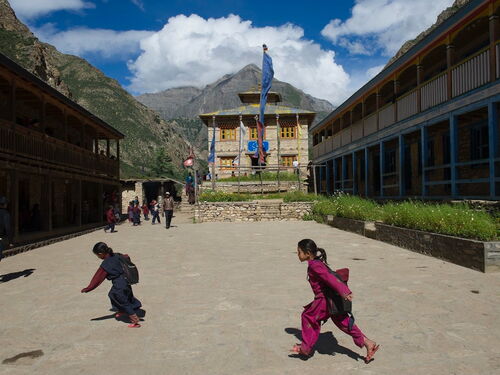
Since its foundation, the Tapriza School has provided basic education, which lasts from the 1st to the 8th grade. Since 2009, the school has also offered upper secondary education. To achieve this, the children complete the 9th and 10th grades. During the cold winter months, the 10th-grade children continue their lessons at the Tapriza Hostel in Kathmandu.
Kindergarten and 1st to 5th grade
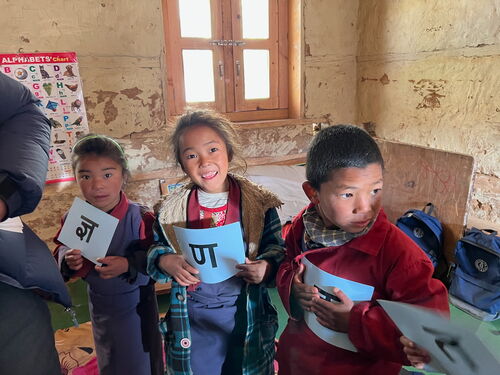
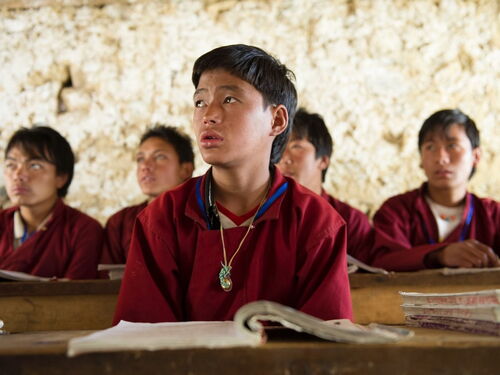
At the age of 4-5, the children start voluntary kindergarten and live at the school. In kindergarten, the basics of the Nepali, Tibetan, and English languages and numbers are learned playfully. In Nepal, primary education begins with the 1st grade and lasts until the end of the 5th grade. From the first grade onwards, regular lessons begin in three languages and scripts, as well as mathematics, history, etc. In addition to the lessons, the young children are looked after by three school mothers (Amas). They assist them with dressing, combing their hair, washing, and dealing with homesickness.
Secondary school, 6th to 10th grade with SEE
At 10 to 11 years of age, the children begin Lower Secondary school, which lasts from the 6th to the 8th grade. At 14, they transfer to the 9th grade (Secondary School Level). After the 10th grade, the young people again take a standardized national exam called the SEE (Secondary Education Examination). By passing the SEE, the students can study at colleges. In 2009, students attended the 10th grade at the Tapriza School for the first time and completed the state final exams in the district center of Dunai. This qualification provides access to university or vocational training. Previously, it was only possible for children from the Phoksundo region to obtain this qualification in a larger city. This, in turn, was financially unaffordable for most families.
The subjects taught are mathematics, Nepali, Tibetan, English, geography, natural sciences (biology, chemistry, physics), Tibetan culture, social sciences (sociology, history), and health. Optional subjects additionally include mathematics, other social science subjects, or accounting.
College, 11th and 12th grade
For the college level, the students choose a thematic focus. At the end of the 12th grade, there is another state final exam. It roughly corresponds to the Swiss high school diploma (Matura). After that, the graduates can start a bachelor's degree program.
Winter School and Hostel in Kathmandu
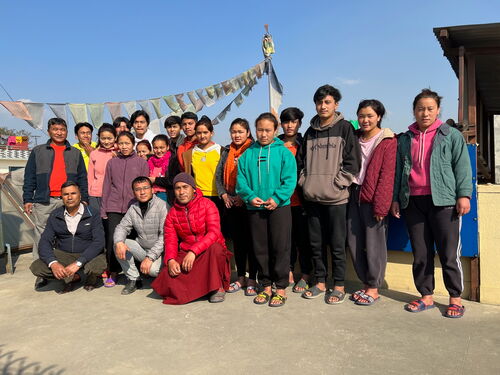
The curriculum in the 10th grade and the preparations for the SEE exams do not allow for a winter break. Therefore, our 10th graders receive lessons in Kathmandu in a hostel specially set up for them. This is also inhabited by our school's students from the 11th grade onwards, as soon as the 10th grade has returned to Dolpo. The hostel is located in Jorpati, near the famous Boudha Stupa.
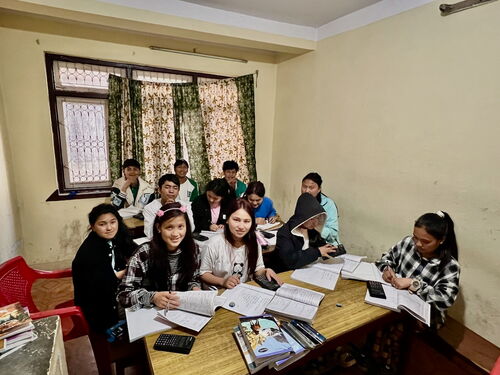
In the winter of 2007/2008, students accompanied by teachers from the Tapriza School were taught in Kathmandu for the first time. The lessons there are more expensive than, for example, in Dunai, Dolpo's district capital. However, it brings many advantages. Firstly, good teachers are easier to find in the capital, which significantly influences the quality and efficiency of the lessons. Furthermore, the students get to know life in the capital in a protected environment during their preparatory classes and are thus better prepared for their further educational path, which will lead some of them to the universities and colleges in Kathmandu.
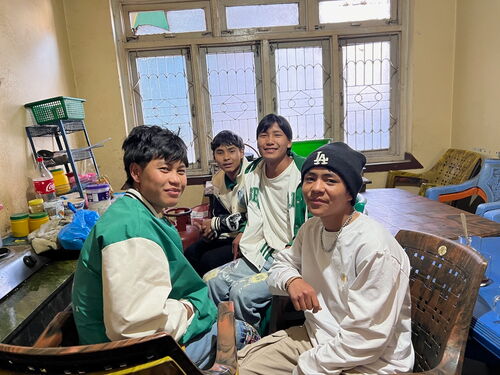
In the meantime, we run a small Phoksundo Hostel in Jorpati, a house where alumni of the Tapriza School who are doing further education or training in Kathmandu can find a home in a familiar and protected environment. This is intended to enable cohesion and the preservation of local culture in the big city. The hostel is used in winter by our Tapriza 10th-grade students to prepare for their exams. During the rest of the time, the hostel is also used by alumni attending the next level of education (10+2) in Kathmandu, and as long as there is enough space, BA students are also allowed to live in the hostel.
Scholarships for studies or further education
11th to 12th grade through scholarship fees
Starting in 2004, we began supporting individual students from Dolpo in their further studies with scholarship contributions. We now support all students in their 11th and 12th-grade education (10+2) with an equal basic contribution. They are also supported by the opportunity to live in our hostel in Jorpati. However, the support is only just enough for the tuition fees, and depending on the field of study, not even for that. Therefore, the students are grateful for any further donations.
Donate now or become a member